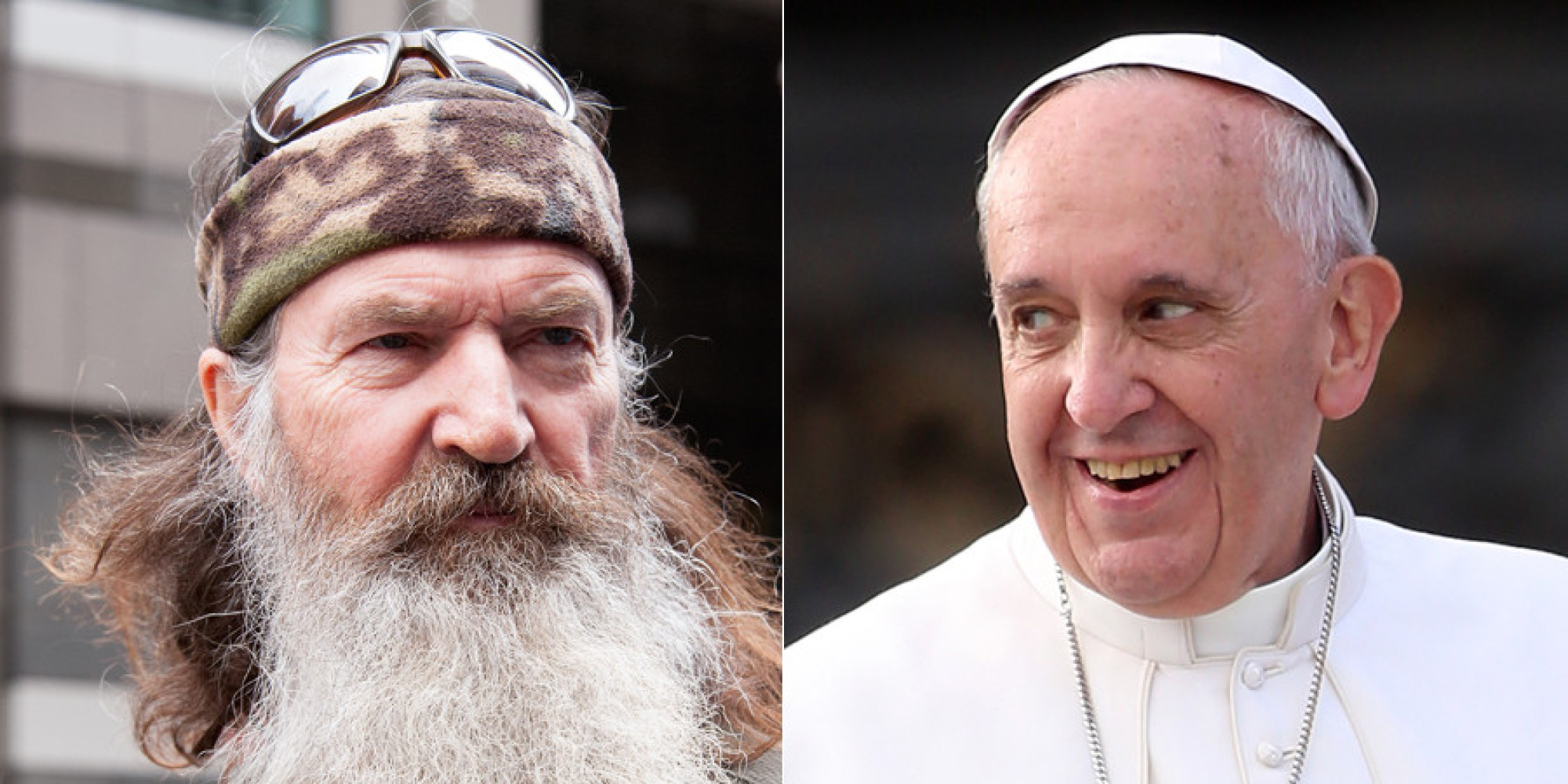
Friday, April 4, 2014

No, We Can't All Get Along


Like most people, I can distinctly recall where I was when certain news events occurred. On the morning of September 11th, 2001, I was getting ready for work when I saw the second plane hit the towers on live television. On the day after my 12th birthday, I was home sick from school but wanted to watch the Challenger take off. And when the Rodney King verdict was delivered, sparking riots in Los Angeles, I was a freshman at the racially diverse University of Southern Mississippi.
 
While the Challenger explosion was tragic, it was largely without conflict in terms of public opinion, where the acquittal of four police officers seemed to put many communities on edge, including our campus. In the aftermath of that verdict, I was never in danger of being harmed, and I did not fear for my safety. What I did lament, however, was how the issue seemed to be driving a wedge between black and white students. Rodney King (in a broken tone) asked the open question, "Can we all just get along?" The answer, it appeared, would be "no".
 

Of course, divisive issues are not new; the history of the USA is really just one big argument. In the beginning, there were heated discussions about King George and independence. There were then passionate debates about blacks being property or people, resulting in the repulsive "three fifths compromise". Ongoing questions of slavery and varying interpretations of the tenth amendment actually tore the nation in half, resulting in a war between the states; the union was eventually restored, but with almost a million fewer men. After much yelling and marching we have survived the arguments about a women's right to vote and public school integration. More recently, there have been many other issues that have divided our country and communities, including hanging chads, shock and awe, defining marriage, and Obamacare.

And yet, thanks in large part to the internet and the ubiquitous reach of various groups skilled at working the public to a boil for their own monetary advantage, it appears we are developing a new front. In this field, the very compliance of thought is demanded by any means necessary, typically through economic threats. One recent example is that of the evangelical humanitarian organization World Vision.

For anyone not aware of the recent controversy, World Vision works with dozens of Christian denominations to organize support for humanitarian aid "in nearly 100 countries, serving all people, regardless of religion, race, ethnicity, or gender...motivated by our faith in Jesus Christ, we serve alongside the poor and oppressed as a demonstration of God’s unconditional love for all people." This is not an organization that primarily intends to convert people to some brand of Christianity (how could they, as converting a population to the teachings of the pentecostal Assemblies of God denomination would certainly be a concern for Southern Baptists) - but to simply meet the basic needs of "the least of these" from Matthew 25.

In the interest of focusing on this common mission rather than taking a position on a number of other controversial issues, the board announced on March 24th that they would allow homosexuals to work for World Vision. At the time of this announcement, president Richard Stearns told Christianity Today:
"It's easy to read a lot more into this decision than is really there. This is not an endorsement of same-sex marriage. We have decided we are not going to get into that debate. Nor is this a rejection of traditional marriage, which we affirm and support.  We're not caving to some kind of pressure. We're not on some slippery slope. There is no lawsuit threatening us. There is no employee group lobbying us. This is not us compromising. It is us deferring to the authority of churches and denominations on theological issues. We're an operational arm of the global church, we're not a theological arm of the church. This is simply a decision about whether or not you are eligible for employment at World Vision U.S. based on this single issue, and nothing more."
The backlash was immediate, as if Max had just decreed, "Let the wild rumpus start!" Within 48 hours the organization was forced to condemn its own action as "a mistake" after ten thousand children were financially abandoned by self-proclaimed Christians, their very lives considered acceptable collateral damage in the effort to punish the organization for their employment policies. Of course, not all groups responded in such a way; some denominations had themselves already accepted homosexual members (and some even clergy).

 It should not be surprising that most evangelical denominations would not agree with allowing gay staff members in the organization, but the scorched-earth retribution made as much logical sense as people destroying their own neighborhoods in Los Angeles or Detroit to protest a national news event. No, it is far worse: rioters and looters do not claim their efforts to destroy flow from their love of Jesus. To quote artist and blogger Matt Appling, "We have proven how many Bible verses we are willing to ignore to enforce what we believe about a few Bible verses."

Former CEO Brendan Eich
This demand for conformity is by no means limited to the religious right. Just yesterday, the CEO of Firefox maker Mozilla was dethroned after being in his position only eleven days. The reason was not embezzlement or incompetence (just think how many CEOs would be fired tomorrow if there were an actual standard on these issues alone), but that he dared to donate $1,000 six years ago supporting California's ban on gay marriage. The donation was personal (not done corporately) and he had not made any declarations on the matter as CEO; as an employer Mozilla supports same-sex marriage and provides benefits to same-sex spouses. So, the furor that eventually caused Mozilla to cast Brendan Eich overboard Jonah-style seemed unnecessary.

Every poll I see on the issue of "gay marriage" indicates that pubic opinion is solidly moving in the direction of acceptance, like it or not, so that battle is all but over. What someone said or did, especially years ago, has little bearing on one's competency in a corporate role, but again groups lined up to demand conformity. If your family is anything like mine, you may also have a grandfather (or uncle, or even mom or dad) that has made a comment here or there that is sexist or racist, but I have yet to oust my 90-year old grandfather for not conforming to the cultural norms of the 21st century. I can disagree with him about certain things and still accept him (maybe even love him) anyway. If he were the CEO of some large corporation, I wouldn't boycott or demand his head - the company would still operate by post-2000 norms even if the CEO still retained a small bit of 1950's bigotry.

While both of these recent stories revolved around positions on homosexuality, this is certainly not merely "a gay thing". There are other issues that have been as divisive (such as the role of church and state relative to the Affordable Care Act), I am just using a couple of recent examples where disagreements have translated into a demand for a certain result - or else.

I'm not saying there aren't issues of black and white. My wife is sometimes often frustrated by my own absolutism and "strong sense of justice". I am in no way suggesting that evangelicals should define their views on homosexuality by public opinion, that progressives should settle for "separate but equal" arrangements, or that you should accept racism because some relatives express it. What I am suggesting is that there is a difference between "black and white" and "all or nothing".

While actions can be black and white, people can't be classified in such a manner. No one is "bad" or "good". This does not mean that I accept some median gray where there is no absolute morality outside of personal perspective; a QR code may seem "gray" from a distance, but it is definitively black and white. How can society operate with groups that are willing to take such drastic measures because they can't accept a few pixels being the color opposite their preference? If the president of a group protesting another group has some personal belief that I don't agree with, do I now refuse to work with that group as well? Exactly how far down the rabbit hole are we willing to go?

This is exactly why we can't all get along.


Saturday, March 15, 2014

The Problem With Authority

In the late fifties, a man by the name of Sonny Curtis joined the Crickets (taking the place of the late Buddy Holly) and they recorded a song Curtis wrote entitled I Fought the Law. It was a top ten hit for the Bobby Fuller Four in 1965, and was even covered by the Clash in 1979. In each version, however, the inevitable outcome was the same - the law won. John Mellencamp practically paraphrased the chorus of I Fought the Law in his 1984 rebel anthem Authority Song: "I fight authority and authority always wins". Since then a number of other popular American songs (and movies) have revolved around rebels, both with and without a cause.

With all due respect to the idealism of Superman, one could say that even from the colonial age, it's fighting authority that has been the American way - but there is another "problem with authority" that is sometimes overlooked: the limits on personal freedom that come with actually being in a position of authority. Recently this problem caused a ruckus at the US Air Force Academy, causing several right-wing news outlets to pounce on an act of apparent religious intolerance. The official response from the Air Force Academy can be found on their Facebook page here. Personally, I take no umbrage at the posting of  a verse from the Bible, the Qur'an, or any other text on a dorm room door, but according to the USAFA the problem is one of authority: "...we in the military who are charged with the important burden of leadership or command must avoid the actual or apparent use of our position to promote personal, political, religious, or other beliefs to our subordinates or to extend preferential treatment for said beliefs."

I should note that I have never served in the armed forces. While I have a great respect for those who do sacrifice years (and some their lives) to serve our nation, it seems to me that doing so also involves surrendering many of the same personal freedoms that many have suggested our military fights for. So, where writing a verse on a whiteboard at a dorm at a secular state university would likely be protected as "free speech", it may be inappropriate according to the Air Force. I may not agree with their call, but I have far more ability to write a critical opinion of their process as a civilian than I would if I were a cadet. For better or worse, the armed forces don't always operate by the same set of rules.

To be fair, though, it's not just the military that has exercised authority at the expense of individual freedoms. Many private schools (especially religious-based) require students to abstain from the consumption of alcohol even when they are of a legal age to do so. They may require attendance to religious services or ban student organizations they oppose (theologically or politically). I don't imagine a student at Liberty University, for example, would be allowed to maintain a whiteboard on their dorm room door quoting the Qur'an (4:171): "...Jesus, son of Mary was only a messenger of Allah...Verily, Allah is the One and only worthy of worship, He is Holy. Far above having a son." Reprimand would be fierce and swift...and that's assuming the student had no authority. Imagine if the student posting was in some leadership role over a number of other students, and suddenly the Air Force's stance doesn't look so harsh.

Personally, I think it has been a great detriment to our society that we have largely abandoned public discourse of certain subjects. However, any productive discussion must be among equals; if any one has authority over another, it is easy for that person's opinions to be considered superior. Such an egalitarian ideal is all but impossible in the armed forces, which is built on rank and chain of command. And because our forces are made up of volunteers (usually) with many ethnic, religious, and political backgrounds, there can't be any response that would make everyone happy.

To some degree, this recent conflict reminds me of the reports of Bibles being burned by the US Army in Afghanistan, sent by a US church to a base there. The Bibles were in Pashto and Dari - obviously intended for the indigenous population and not for American soldiers. In that case, it is interesting to note that the reports came out in May of 2009, giving many perceived fuel for criticizing the Obama administration, even though the actions actually took place in the spring of 2008. To my knowledge, no one suggested that these actions by a military commander, while regrettable, were evidence of George W. Bush being "a Muslim" and/or "anti-Christian".

I can say, however, that I would not want to be in a decision-making role when placed in such a position by the ambition of an American church. It's certainly easier to criticize those in authority than to take responsibility ourselves - I noticed that the church in question had just enough zeal to get the Bibles and send them to our military (which is not in the Gospel business), but not enough to send their own pastors and deacons into a civilian area so they could distribute them personally.

We would do well to keep in mind that those in authority are just like anyone else, in the sense that they are fallible human beings yet equally entitled to their own beliefs (religious or otherwise). I would consider it a positive thing to have more openness from those in authority, but if we're only going to condemn them when their opinions are not our own, who can expect anything different?  We get cold, impersonal authority figures because we demand them.

I'd suggest changing that, but I don't want to be offensive.

Saturday, December 21, 2013

And Here's To You, Mr. Robertson

"I predict, this 19th day of December of the year 2013, that Mike Brooks will soon compose a blog post on the difference between our 1st amendment rights to the free exercise of speech and our need to be accountable for the consequences that flow from our free exercise of speech, complete with Phil Robertson references ..." - Jeff Weldon
 It was early Thursday morning when I read about what, judging by the number of people weighing in via Facebook, must be the most important news story since the World Trade Center was destroyed by terrorists: some old, conservative, Southern, Christian dude believes - correctly - that the Bible condemns homosexuality. This is not an uncommon position (and can even be held by some young, moderate, Yankee, Muslim woman), so I was a little surprised at the outrage. After reading up on what was actually said (oh my.....), I started to wonder if anyone posting their support had actually done the same, or if they simply wanted to state a position in the imaginary "war on free speech".

I should begin with a disclaimer as well as an admission of my own personal bias in this situation. I have never watched a single clip from "Duck Dynasty". I had seen these bearded guys pop up in the Facebook news feed in the past year or two with a similar frequency to Candy Crush invites, but largely ignored them both - just as I scrolled past more than a few statements about Jesus and sisters and moms being the best without a "like" or "share" (Sorry, Mom). It appears the draw for many evangelicals is that it portrays a family outspoken about their faith, without inappropriate language or situations; this of course stands in contrast to the commentary about human anatomy in the interview which I would not want my kids to read.

I also fully admit, right here and now, that I really have a strong dislike for "reality television" in general. I sadly witnessed the birth of this genre when tuning in to MTV one day (the M stood for "music") hoping to see that zany "Once in a Lifetime" video - but instead being rudely introduced to a "Real World". Video may have killed the radio star, but "reality" was killing the video, and I was not a fan. Why can it never just be the same as it ever was?

Fortunately, it would be many years later before the virus would spread to claim much of television. For much of my youth, I could still watch scripted sitcoms like Family Ties or The Cosby Show on the main networks, thank God. To this day, seeing another commercial for the 56th reincarnation of The Bachelor or America's Got Cooties or for the newest group of B-list celebrities dancing or diving or writing haiku drives me to my knees, begging the Almighty for even an ALF rerun. So, even if the Robertsons are better role models than the Kardashians, I would still tend to root for the cancellation of "Duck Dynasty", simply on principle.

And now, to fulfill the prophecy.
"Congress shall make no law respecting an establishment of religion, or prohibiting the free exercise thereof; or abridging the freedom of speech, or of the press; or the right of the people peaceably to assemble, and to petition the Government for a redress of grievances..." - First Amendment
The first amendment is often referenced by its individual protections by phrases like "freedom of religion" or "freedom of speech". The purpose of the Bill of Rights, if not the entire US Constitution, is to restrain the power of government to ensure a measure of personal liberty, and it is no coincidence that religion and speech are mentioned first in the amendment that is the first of the American Magna Carta. To the best of my knowledge, however, Congress has made no law as a result of Phil Robertson's recent comments, so any reference to the first amendment in his defense is misplaced. People may debate whether the television network reacted appropriately or inappropriately to the comments, but it is not a constitutional matter.

Perhaps the greatest irony in this (or any) discussion of "free speech" is that often, the phrase is used in an attempt to silence or dismiss the speech of someone with an opposing viewpoint. I fully support Mr. Robertson's right to answer a question in any fashion he sees fit, and to hold any religious belief (or none), but I do not see those voicing opposition to his comments as enemies of free speech - they are merely exercising it for themselves. I've seen a lot of threats back and forth over the last couple of days, starting with GLAAD and the NAACP (the last organization in the country allowed by society to use the word "colored", but I digress) threatening the network, but expanding to people threatening advertisers (if they support the show, or if they drop the show), the network threatening Mr. Robertson, and fans of the show threatening the network. It's Chick-Fil-A on steroids. It's messy, and much of it regrettable, but it's all "free speech".

 It's also all economics. Yes, Mr. Robertson used some unnecessary, harsh, and completely illogical comments about homosexuality. I certainly can't support his comments personally, but even if he had been respectful and to the point - if he had simply said, "As a Christian I consider homosexuality to be sinful" and left off the bits about vaginas, anuses, and terrorists - I am pretty sure that A&E would have still released the usual disclaimer that the views of Mr. Robertson are his own and do not reflect the ideals of the network. But Mr. Robertson pushed a little harder than that, and then GLAAD pushed back on A&E, and they in turn completed the triangle by pushing back on him. Mr. Robertson's comments very likely come from his own personal convictions, but the network's reaction is more likely out of economic consideration. The stronger the wording, the more likely there may be an economic cost to someone involved, whether the loss of a contact, contract, or position. Often the real enemy of free speech isn't another's free speech, it's capitalism.

I can't help but think how little I heard the phrase "freedom of speech" ten years ago, when in March of 2003, lead singer Natalie Maines of the Dixie Chicks told an audience in London: "Just so you know, we're on the good side with y'all. We do not want this war, this violence, and we're ashamed that the President of the United States is from Texas." The backlash was strong and swift; radio stations dropped the Chicks from rotation (their cover of Landslide dropped from #10 to #43 in a single week), and groups organized public destruction of their CDs. A lot of the same people who are today suggesting that actions taken against Mr. Robertson are un-American and/or violations of the freedom of speech were also highly supportive of such retribution against the country trio.

As the saying goes, freedom isn't free. There are costs to taking a stand for anything, which is why many politicians (and sadly, many religious leaders) don't really say anything that means anything. One should speak his or her mind with conviction, based on the power we have through our liberty.  But, as Spidey will tell you, with (great) power comes (great) responsibility. Simply having the right to say what you wish does not imply that either the content of your message or the manner in which it is delivered is right. Part of communication is at least giving some thought to how the message will be heard by one's intended audience. This isn't "political correctness", it is prudent forethought.

For those who may equate the backlash against Mr. Robertson to an attack on religious belief, consider for a moment that 45% of Americans believe homosexuality to be a sin, and I have never heard anyone suggest that almost half of the population are bigots. Pope Francis has affirmed the teachings of the Catholic church on the matter, and the "liberal media" has named him Person of the Year. If the media is simply opposed to the idea that homosexuality is a sin, or opposed in general to the gospel of Christ, then how could this be? It's very easy to dismiss offense with religion, to suggest that the problem is that someone merely doesn't want to acknowledge "truth" as defined by someone else, but is the goal of religious conversation to offend, or to mend? Most often, the conflict is not one with God - it is with the self-appointed messenger.

I have no doubt that Phil Robertson did not intend offense at his comment. I'm sure he did not mean to present Christianity in a negative (and strange) way. I take him at his word when he says that he does not hate anyone and wants to see people accept his faith, but if this is the goal, perhaps the methods of the Pope are more effective? Mr. Robertson is on a show with a huge viewership, and I don't know what he does on it, but I also see Pope Francis in the headlines about every week: he's feeding people, ministering to the homeless, washing the feet of young prisoners, embracing the physically deformed. Granted, no one expected a GQ article to change the world, but it is very odd that most Christians I know have little to say about the Pope (except for a few who criticize his comments about economics) and yet so many have posted a zealous defense of Mr. Robertson.


Yes, it is true that you can't make an omelet without breaking a few eggs, but going in to the grocery store, picking up a dozen eggs, and dashing them to the ground is not making an omelet, it's just making a mess. What are you cooking today?


Sunday, December 8, 2013

American Culture Under Attack by Religious Extremists!

Every religion seems to have some level of division - there are differing schools of Buddhist thought, Sunni and Shiite camps in Islam, a few major sects in Judaism, and far too many different denominations to even name in Christianity. As such, there will always be some measure of conflict, but lately I've seen a number of reports that have convinced me that America may soon be at war with a small but growing religious minority. One of the major figures in this war is a radical cleric who recently expressed his support of Ahmed al-Tayyeb, the top imam of the University of Al-Azhar, and has been known to visit imprisoned Muslims. Last year, he moved his base of operations to southern Europe and took a new identity, but that didn't stop him from publishing an 84-page manifesto just two weeks ago that railed against the "tyranny" of American capitalism. Oddly enough, he titled the work "Evangelii Gaudium", or "Joy of the Gospel".

The next week, I saw another attack, this one on well-known financial guru Dave Ramsey, when a religious feminist criticized a post explaining the apparent path to wealth that is the American dream; she attacked the very foundations of America by calling it a land of "slavery, ethnic cleansing, gender inequality, and Jim Crow". Lastly, at the recent death of a religiously motivated, convicted African terrorist who was on the American terror watch list until 2008 (and known for several high-profile criticisms of the USA), President Obama suggested that Americans lower their flags to half staff out of respect (and calling him a "courageous and profoundly good human being"). There he goes again, palling around with terrorists.

In all political correctness fairness, one should note that the majority of Christians worldwide are peaceful, and are not out to destroy America. Yes, there are violent-sounding passages in the Bible, and plenty that condemn "the rich", but more moderate Christians are highly supportive of wealth and the USA. Vocal opponents include Methodist Rush Limbaugh, who condemned Pope Francis' teachings as "pure Marxism", but sadly, the average Christian refuses to condemn the more extreme rhetoric of these radicals and terrorists. As a result, the stage is set for an ineluctable conflict that could become the next stage of warfare between religious and cultural ideals, one that the virtually disbanded "Moral Majority" would never touch with a 39 1/2-foot pole.

Nothing New

While it may seem a new direction, the progressive economic idealism of Pope Francis (formerly known as Jorge Mario Bergoglio) is not without precedent. The Didache 4:6 states: "share all things with your brother, and do not say that they are your own. For if you are sharers in what is imperishable, how much more in things which perish!"  Individual wealth was attacked by many of the early doctors: St. Basil the Great echoed the sentiment in the fourth century: "That bread which you keep belongs to the hungry; that coat in your closet, to the naked." St. Augustine went so far as to say that "business is in itself an evil"; Jerome claimed that "a man who is a merchant can seldom if ever please God." St. John Chrysostom railed, "So destructive a passion is avarice that to grow rich without injustice is impossible." 

Jesus does not use the word "impossible", but it's possible one could assume that from his statement that "it is easier for a camel to go through the eye of a needle than for a rich person to enter the Kingdom of God!" (Matt. 19:24, ESV)  James linked wealth with oppression: "Are not the rich the ones who oppress you, and the ones who drag you into court? Are they not the ones who blaspheme the honorable name by which you were called?" (James 2:6,7) There are numerous other verses that paint the wealthy in a negative light as well, but it will suffice to say that Pope Francis is not pulling his negative view of personal wealth from a source outside of Christianity.  Both biblically and historically, there is a wealth of Christian criticism of wealth.

Again, not all Christians would agree with the statements above.  Sarah Palin was slow to criticize the Pope, suggesting instead that his words were being twisted by "the liberal media", but such assignment of blame (and thus evasion of the conflict proper) is becoming harder to maintain as Francis continues to speak and pen his sentiments in his own hand. If the Vatican itself posts an official treatise critical of wealth disparity, the media is largely taken out of the equation, unless of course one considers the Vatican to be a part of the liberal media.  Fortunately, the Pope's character is so admired (by persons of any religion, or none) that the typical political ad hominem attacks will only backfire, indicating the inevitability of conflict among American Christians, in particular.


What's Wrong With Wealth?

Dave Ramsey has some experience with wealth. He has helped thousands of people (primarily churchgoers) manage and increase their wealth, and he has increased his own wealth in doing so. Like any rising star within evangelical circles (ie Rick Warren, Rob Bell), he has attracted a fair amount of criticism in the process. The most recent controversy concerned a post on Dave's website that was actually written by Tim Corley, entitled 20 Things The Rich Do Every Day.  In a rebuttal posted on CNN, What Dave Ramsey gets wrong about poverty, blogger Rachel Held Evans questioned the implied causality of the list as well as the theological implications - and battle lines were drawn.

After reading Corley's list, I can't say that I disagree with any of the points (although many are slight variations of others, as if there was a quota to meet twenty). Most seem like common sense; it is highly advisable for anyone to read more, take education seriously, eat healthy and exercise, and so forth.  However, I also see the point of those that question this list.  While many of these points are simply good advice not unlike after school public service announcements, the latter are simply presented as helpful advice.  Corley's list advises people to so these things because these are what "rich people do", making the assumption that we all are envious enough of them to want to mimic them, so that we too may become rich people.  Of course, as Mr. Ramsey claims to teach from a biblical perspective, he should be aware that the Bible's mentions of the wealthy are far more often the direct opposite, contrasting a moral good with the actions and attitudes of the wealthy (Interestingly enough, a recent study came to this same biblical conclusion).

As many others have pointed out, the list is also not scientific, in that there is no control.  There was no definition given as to what income level was considered "rich" or "poor", and it also failed to account for other factors.  For example, if we are talking about millionaires, the majority of them are over 60 years of age. Especially if no inheritance was involved, it simply takes time to pay off a mortgage (and then for that property to appreciate in value), to compound enough interest in one's 401k, et cetera. People may be wealthy and retired: if a large number of millionaires work far less than 40 hours, does that mean that we all should do so, to emulate success?  Statistics also indicate that the wealthy are more likely than the poor to be non-religious/atheistic, is that also advisable? If numbers indicate that 90% of rich people have only one or two children, and the poor average four, does this make one morally better? Or, to use a real example, if most of the mega-rich agree that taxes should be higher on the wealthy, should we not make their superior opinion our practice?

Perhaps the most disappointing aspect to this whole exchange was Mr. Ramsey's ungracious comeback to those who questioned the post. Calling his critics "ignorant", "spiritually immature", "doctrinally shallow", he instructs them to "grow up", while at the same time perpetuating the idea that, at least in America, wealth is the reward of those good enough to earn it.  It should come as no surprise that those with little feel they deserve better, while those with much feel they have earned their wealth by being better than those without.

The link between moral goodness and wealth is drilled into Americans at the earliest of ages.  Before any of us learn the truth behind the ruse, most of us are taught that Santa Claus rewards good behavior with material goods, and thus the child with one poor parent, who receives little if anything on Christmas, must have misbehaved.  The child with two wealthy parents, who receives anything he requests, must be very, very good.  Sadly, many of the comments I've read in the defense of wealth are not far removed from this false correlation: the poor (at least in America) are so out of choice, and if they were not so lazy, or foolish, or without faith, they wouldn't have to endure poverty, which is merely the consequence for their lack of vision.

To clarify, I don't believe Mrs. Evans was criticizing wealth, but rather the importance assigned to it in our culture. I certainly don't oppose wealth, and could easily accept having more of it myself, but I also acknowledge that in theological and moral terms, wealth is no better than poverty. The irony is that some of the same media sources that complain about envy of the rich also feed the public a steady stream of coverage of (and praise for) them; if "class warfare" exists, surely they are the aggressors.


Why Praise Communist Rebels?

If there's one communist out there more widely praised than Pope Francis, it has to be Nelson Mandela. But where the Pope has preached non-violence, Mandela was convicted for plotting against the government of South Africa, including acts of terrorism. A lifelong Methodist and a member of the communist-aligned ANC, Nelson Rolihlahla Mandela did more than just speak out against the dangers of capitalism, he took up arms against his oppressor.

Of course, in this respect he was no different than the Episcopalian George Washington (not that the Stamp Act was in any way equal to Apartheid), leading fellow colonial subjects in a fight for representation. In fact, it would be hard to criticize Mandela's actions and statements at all if they were not so regularly aligned with our Cold War enemies.  Mandela most closely related with Fidel Castro, with whom he had a strong friendship.  On a visit to Cuba in 1991, he proclaimed:
“...the Cuban Revolution has also been a source of inspiration to all freedom-loving people. We admire the sacrifices of the Cuban people in maintaining their independence and sovereignty in the face of the vicious imperialist-orchestrated campaign.... Long live comrade Fidel Castro.”
In the same speech, he also praised Che Guevara, calling him "an inspiration to all human beings who cherish freedom." A decade later, expressing his disapproval of the Iraq invasion, Mandela went so far as to say, "If there is a country that has committed unspeakable atrocities in the world, it is the United States of America."

He also worked tirelessly to promote an anti-capitalist agenda, considering nationalization of some industries and maintaining ties with the Communist Party. Stopping short of calling wealth an evil, Mandela said in a CNN interview on his 90th birthday that the rich do have an obligation to share their wealth with those in poverty. He helped author a government initiative in 1996 known as the GEAR (Growth, Employment, And Redistribution) policy, and yet was celebrated (and now mourned) by a number of American conservatives.

While there are certainly differences between a humble Catholic who happens to be the Pope, a liberal-leaning American blogger, and a communist South African freedom fighter, the common thread is that the new "enemies" of the American way of life are not faceless Soviet atheists, nor are they stereotypical fundamentalist jihadists - they are principled Christians seen in a positive light by most Americans.

Flooding the Engine

Even the late Nelson Mandela was not opposed to capitalism per se. South Africa, to this day, still operates primarily as a free market economy, as does the United States. While many classify them as "socialist", most European nations also operate by free market principles, even with a greater measure of taxation or government regulation. With this in mind, one must be careful to suggest that a critic of concentrated wealth is opposed to capitalism - more often than not, the issue is with the distribution of wealth and the priorities of the society, which are different matters than the mechanics of an economic theory.

In its purest form, free market capitalism is equivalent to economic Darwinism; that is to say, that the craftiest among us deserve to have all they can get, and the less successful only to starve. No one truly desires such a system, regardless of political leanings. The truth is that we all believe, to some degree, in a redistribution of wealth from those who are able to those who are in need. We merely disagree on the definitions of "able" and "need", as well as the amounts to be involved and the degree to which the transfers are voluntary.

My personal issue with the current state of American capitalism is that I believe we have abandoned the principle of merit.  Where once we rewarded hard work with wealth, we now praise wealth itself, and celebrate those who have it and yet do as little as possible. I acknowledge that (as my friend Tom has said more than once) self-interest is not the same as greed, and that it is the necessary fuel for capitalism to prosper. However, even the most conservative auto mechanic will not argue that more fuel will always make the car run more smoothly, or that it is unfair for the brakes to hinder the ability of the fuel pump. Elaborate systems of regulation are required to maximize the performance of the car and to ensure the safety of those who rely on it.

Certainly, it is not an oxymoron to be a religious capitalist, nor to be a religious socialist. There will continue to be debate on the ethics and responsibilities of wealth. The new wrinkle is that through an expanded marketplace of ideas made possible by the internet and other technological advances, Christianity is being slowly pulled away from American (conservative) idealism. Perhaps history will repeat itself. Unfortunately, those that have expressed an interest in returning to the faith of our fathers likely did not have St. John Chrysostom in mind.


Saturday, November 30, 2013

Quid Est Veritas?

First off, I love science. 

Through observation and experimentation, we have come to define and understand our natural world. We understand the paths of planets and of comets and the anatomy of all sorts of plants and animals. We are able to diagnose and treat a number of medical conditions; we can land a mobile robot lab safely on the surface of another planet.

Of course, this is all possible because we are dealing with empirical evidence.  We can observe and test the physical, allowing us great understanding.  Mankind has had much greater difficulty, however, with defining philosophical ideals like valor, justice, or love. Still, in spite of our inability to truly and consistently define these concepts, we remain not only collectively convinced of their existence, but mystified by them.  In fact, the ancient Greeks actually created deities to personify many of these ideals.  Many great philosophers have written at length on these matters, and inquiries continue to cycle through works of literature, music, and art with varying depth, from the Shakespearean soliloquy to Haddaway's ubiquitous question of 1993. 


Ecce Homo ("Behold the Man"), Antonio Ciseri, 1871
From a philosophical (or even theological) standpoint, the greatest question has to be that of truth.  Before one can tackle "true love" or "true goodness", one must answer how to know what is true.  Certainly, Pontius Pilate was not the first to ask, "what is truth?" - but his inquiry is probably the most well known, being recorded in the Gospel of John and thus in just about every hotel nightstand in the United States of America.  Scholars debate Pilate's motivation, but in any case, there is no record of a response to his question.

As I hope to finish this post yet this week, I must keep things rather basic.  With that in mind, there are two main philosophical camps concerning this question, based on whether one considers truth (to the degree it exists) to be relative or absolute.  If one man considers something to be true, is this based on his own mind and perception, or is he either right or wrong about a universal standard? Is our reality truth? Or, as Morpheus famously asked in The Matrix, "what is real?"


Morpheus is indeed illustrating a position of philosophical realism, that although perception may create a false reality - there is in fact another reality, a universal truth that remains true even if unknown or rejected.  I, like most theists, gravitate toward this school of the absolute. Plato illustrated this same concept with an allegory of the cave and shadows of reality, coming to the same conclusion: while truth exists independent of our perception, our definition of the real is often warped by our own experience.  But how does one mine the true from the untrue?

Sir Arthur Conan Doyle, speaking through his fictional character Sherlock Holmes, proposed that "when you have eliminated the impossible, whatever remains, however improbable, must be the truth."  Although I agree that the truth is often considered improbable, I must also admit that such a statement is only plausible coming from a fictional super-detective.  The ability to ascertain truth from clues and observation is limited, in the case of a police detective, to that which one can prove beyond a reasonable doubt.  Even if he or she correctly identifies the guilty, there must be evidence, and it must be admissible.  It must be properly obtained within the confines of the law.  In short, it may not be enough to know truth - one must be able to relay it to the minds of others by means of producing something they will accept. 

Although it follows the lines of Sherlock's sentiment, I prefer the allegory set forth by Tolstoy: "Progress consists, not in the increase of truth, but in freeing it from its wrappings. The truth is obtained like gold, not by letting it grow bigger, but by washing off from it everything that isn't gold."  In the age of the internet, Tolstoy seems even more a genius.  We have instant access to all means of "information", but as anyone can post just about anything, fool's gold abounds. If you wish to "prove" any position, a simple Google search will reveal at least one or two supporting sites. Thomas Jefferson, Benjamin Franklin, or Mark Twain can be attributed with any quote you wish, instantly endorsing your favorite ideology.

THIS IS REAL!!!
While these "wrappings" are evident in all forums, perhaps none is as dangerous as those done in the name of religion.  To again quote Tolstoy, "it is terrible when people do not know God, but it is worse when people identify as God what is not God." Christianity (like most religions) centers on the word of God being absolute truth, with God being the only pure example of the ideals humans universally seek, including justice and love. Unfortunately, even divine revelation is subject to limited perception and is thus often warped and misinterpreted, both knowingly and unknowingly.

Without question, any biblical scholar must devote himself to study, but even among a small number of genuine truth seekers there will be conflict.  I know of some who believe God has condoned the practice of (earthly) capital punishment, for example, while others are convinced that Christians are called to oppose the practice and defend life.  In both cases, I respect those positions and know they were not arrived at lightly.  As I wrote about several weeks ago, it is quite possible to have two people from the same congregation with conflicting interpretations of the account of creation that begins Genesis.  Many groups consider the Bible to be inerrant, some do not. Reading the same book, some will be inclined more toward pacifism than others.  Some will argue against the consumption of alcohol, some will lean more Arminian, some will insist a pre-tribulation rapture must take place.  Everyone's theology is a little different.

This leads me to the conclusion that every believer inevitably has at least a position or two that is in error, myself included. Even with the best resources, humans can't help but make mistakes. Absolute truth most certainly exists, but no one can claim to know it completely. There is an important distinction to be made, though it so rarely is: absolute truth exists, but your perception (or mine) of what it is may not be entirely correct. A disagreement on one's biblical position is not equivalent to disagreement with the word itself, only to an interpretation of it, and if we can be honest with ourselves, many of the details are relatively inconsequential. 

Seek God. Seek justice, seek truth. Accept that we will all fail to comprehend these fully. To err is human, but fortunately for us all, there is divine forgiveness.

Saturday, November 23, 2013

The Dream of Anarchy, or, Strange Women Lying in Ponds


If there is one thing that political liberals and conservatives can agree upon, it is that the government is inefficient, misguided, detached, and morally deficient (they will, of course, differ on which actions are good and bad, as well as defining the ideal).  Recent polls clearly indicate that Americans are unhappy with Congress in particular, currently at a nine percent approval rating.  While I would agree that our current elected representatives are historically poor, I acknowledge that even in the best of times, government is rarely popular.  As G.K. Chesterton put it, "The poor have sometimes objected to being governed badly; the rich have always objected to being governed at all."

This is not really surprising; it's practically human nature to question and even resist authority.  Especially in a culture that emphasizes individuality and competition, rules are often viewed as roadblocks to success and happiness.  To some degree, we are all guilty of justifying unlawful actions; I myself often mentally rewrite posted speed limits with what I believe to be the de facto limit, perhaps five mph more.  Business leaders may be pressured to ignore regulations in pursuit of greater profit, just as athletes are often pressured to use drugs or other banned substances for greater performance (leading to more money and fame).  However, in all of these cases, cheaters still desire the law to limit others; merely rebelling does not make one an anarchist.

In fact, it's rather difficult to define the positions of an anarchist, just as it is nearly impossible to define anarchy itself.  In popular use, anarchy is used often in place of "chaos", but the etymological definition means only "no ruler", just as a monarchy means "one ruler", typically a king.  But perhaps, old woman man, you are perfectly content with your anarcho-syndiclist commune?  Is this not itself a system of government, with a ruler?  How is any order possible at all without a government (and is a government possible without a "ruler")?

"We started off trying to set up a small anarchist community, but people wouldn't obey the rules." - Alan Bennett

Simply put, if rules need to exist, then a ruler needs to exist; this is really the central point of the social contract theory and the writings of Thomas Hobbes.  Certainly, there will be disagreement on the best system of government, but my point is that even those that advocate "anarchy" really aren't: they often are using the idea as an antithesis to the system they wish to dismantle without giving much definition to the alternative, one that will certainly still involve some measure of rule.  Another individual or group may consider that new system barbaric, and the dislike for government continues.

Of course, I do not typically converse with anarchists, nor do I personally advocate a totalitarian, Palpatinian rule.  The political discussions I see in our present age are from slightly more moderate positions, arguing for more or less government intervention in a number of issues.  I believe such discussions are healthy and necessary to any republic in which the public has a voice in their representation.  The only real conflict I have in such conversations (other than that they are often less than civil and amount to name-calling) is one of dealing with mankind's inherent flaws: advocates for strong, centralized government often do so out of a concern for what society would become without such oversight, given the state of man, while those that advocate less government control do so out of a concern for what a ruler would or could do to a society, given the state of man.  If "corporations are people", then are not governments people, too? 

The bottom line is that the flaws of government are our own flaws.  We elect people to represent us, and in spite of the naysayers, the American public gets it right: it elects prideful, selfish, immoral opportunists into office - who could better represent the American public? 


Saturday, November 2, 2013

The Nightmare Before Christmas


One of my favorite opening lines in literature, and certainly the one I recall most often, is the one that begins The Go-Between by L.P. Hartley (1953): “"The past is a foreign country: they do things differently there."

As I have mentioned previously in my writings, I do not take this to mean that morality is not constant. Certainly, there are absolute ideals of good and evil that are recognized across borders and centuries, but there are also concepts that are embraced (or shunned) due to cultural ideas that are subject to change. Even the recidivist thief H.I. McDunnough summarized this duality (albeit hypocritically) by stating “There's what's right and there's what's right, and never the twain shall meet.” (Raising Arizona, 1987)

This past week I got to observe (the Protestant, American Midwest) society’s intricate dance around the holiday called Halloween. Because some religious conservatives object to the traditional holiday, there appears to be a widespread re-branding, not unlike the one these same people complain about come Christmas-time, with events having names like “Fall Party”, “Harvest Festival”, and the like. Of course, the events still have plenty of costumes and candy, they just won’t call it by its actual name so as to not offend – but come December, watch your butt if you dare say “Happy Holidays” or have a “Winter Party”. Apparently, it is acceptable to rename some holiday events, but not others.


Potty on, Wayne. Potty on, Garth.
Of course, of those people I know who may be opposed to celebrating Halloween, none suggest that dressing up in a costume, walking with one’s children through the neighborhood, or eating fun size Twix bars is inherently wrong. Surprisingly, none of them even refer to the redistribution of candy as an indoctrination of children toward socialism. As best I can understand, the objection is that the modern holiday, though commercialized and diluted, is derived from ancient, non-Christian rites, but again the problem must either be selective principle or historical ignorance.

While there are some similarities between Halloween and some Celtic pagan rituals (especially Samhain), these are commonalities due primarily to the time of year in which the holiday falls. Bonfires may have been lit with some intent or significance thousands of years ago, for example, but a church youth group lighting one in the 21st century is hardly a nod toward paganism; it is little more than a sign of the season turning a bit colder. In fact, many scholars believe that in spite of certain correlations, our holiday is primarily of Christian origin, as the very name is derived from “All Hallows’ Even”, which also spawned “All Saints’ Day”, “All Souls’ Day”, and its Latin American version “Dia De (los) Muertos”, or Day of the Dead.
 
Of course, the average trick-or-treating ten-year-old boy concerns himself with neither Celtic nor Catholic rituals, and adults will largely fail to complement the sights of skeletons and caskets with introspection on the certainty of mortality. It is merely a nation-wide dress-up day. Sure, we can take advantage of the North American contribution to the day by carving a pumpkin or two; pumpkins entered the Halloween narrative only in the last couple of centuries, as they were native to North America when Irish settlers brought a similar tradition with them (in Ireland, they carved turnips). And let’s face it, if it were not for this gourd genocide, what would we do with all those pumpkins? I’m sure handling this surplus La Tomatina-style could result in some serious injury.

But, if one is going to object to the holiday based on a tie to pagan symbolism or pre-Christian ritual, then why celebrate Christmas? While it does commemorate the supposed birth of Christ (scholars disagree on the time of year, and even the year), it has been well-documented that decorating a fir or other tree that lived through the winter (at or near the Winter Solstice) was a pre-Christian tradition. In fact, when Christmas was first celebrated (not until the mid-fourth century), it too bore little resemblance to the holiday we know today.

Even the typical Nativity scene (with Magi alongside shepherds in front of a pale-skinned newborn) is obviously errant according to the gospel of Matthew.  While I acknowledge that this is merely a harmless, cultural adaptation, it still puzzles me why certain foreign elements are largely accepted while other elements (even that are not actually counter to orthodox Christianity) are equated with evil (see "yoga", "karate", "meditation", "rock music", and "quesadilla"). 

Puritan pilgrims to the New World disapproved of celebrating Halloween, but they did not approve of celebrating Christmas, either.  The Puritans of today seem to be more selective.  While they largely disapprove of Halloween's focus on deception and trickery, they take no issue with the blatant hypocrisy of telling a child caught in telling an untruth that "if you lie, Santa won't be coming on Christmas Eve".  They take no issue with supporting a materialistic society that claims to work on merit but really only reflects the budget of parents and grandparents (subtly equating the notions of wealth and goodness).  They may just trample you when the store opens at 8pm on Thanksgiving Day.  But whatever you do, don't greet them with "Happy Holidays".  That's just wrong.